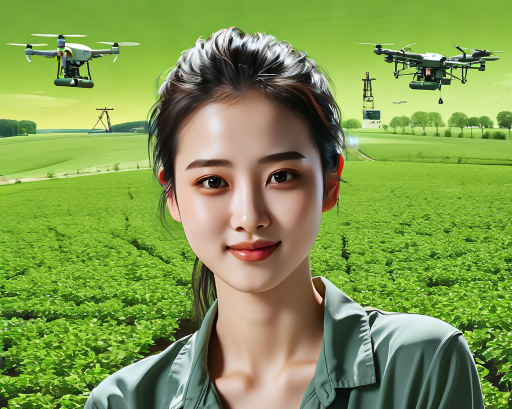
The global challenge of feeding a growing population amidst climate volatility, dwindling resources, and environmental degradation demands more than incremental improvement—it requires a fundamental transformation of our agricultural systems. Enter Sustainable Agriculture Technology (Sustainable Ag Tech), a rapidly evolving field moving far beyond simple organic methods. It represents the intelligent integration of innovation, data, ecology, and efficiency to produce food, fiber, and fuel in ways that actively *regenerate* ecosystems, enhance farmer livelihoods, and secure long-term food sovereignty. This isn’t science fiction; it’s the practical, scalable toolkit already reshaping fields from Iowa to India, proving that productivity and planetary health can, and must, go hand in hand. At its core, Sustainable Ag Tech leverages cutting-edge advancements to minimize waste, maximize resource efficiency, and build resilience into the very fabric of our food production.
The most visible pillar of this revolution is Precision Agriculture (PA), powered by an array of sophisticated sensors, satellite imagery, drones, and GPS-guided machinery. Think of it as “farming by the square meter” rather than the entire field. PA technologies collect vast amounts of real-time data on soil moisture, nutrient levels, pest pressure, crop health (using multispectral imaging), and microclimate conditions. Artificial Intelligence (AI) and machine learning algorithms then analyze this data, generating hyper-localized recommendations. For instance, instead of applying uniform rates of fertilizer or water across a large field, variable-rate technology (VRT) allows tractors to automatically adjust application – adding more nitrogen only where the soil test shows deficiency, or precisely targeting irrigation only to dry patches identified by soil moisture sensors. The results are staggering: significant reductions (often 15-30%) in water usage, fertilizer, and pesticides, leading directly to lower costs for farmers, minimized runoff polluting rivers and oceans, reduced greenhouse gas emissions from fertilizer production and application, and crucially, higher yields on existing land. Companies like John Deere and Climate FieldView are making these powerful tools increasingly accessible, turning data into actionable intelligence that empowers farmers to make smarter, more sustainable decisions every single day.
Beyond the high-tech sensors, Sustainable Ag Tech deeply integrates regenerative ecological principles, often amplified by digital monitoring. Practices like no-till farming, cover cropping, diverse crop rotations, and integrating livestock grazing are designed to rebuild soil health – the foundation of sustainable agriculture. Here, technology plays a vital supporting role. Soil health sensors track organic matter, compaction, and microbial activity over time, providing objective metrics to validate the effectiveness of regenerative practices. Drones equipped with specialized cameras can map cover crop establishment or identify areas of soil erosion needing intervention. Furthermore, platforms like Regen Network utilize blockchain and remote sensing to verify regenerative practices, creating new markets and incentives for farmers adopting these soil-building techniques. Healthy soil, rich in organic matter, acts as a massive carbon sink, improving water retention, reducing erosion, enhancing biodiversity, and ultimately, increasing the farm’s resilience to droughts and floods. Sustainable Ag Tech doesn’t just apply inputs more precisely; it helps farmers work *with* nature, transforming degraded land into thriving, productive ecosystems.
The frontier of Sustainable Ag Tech lies in