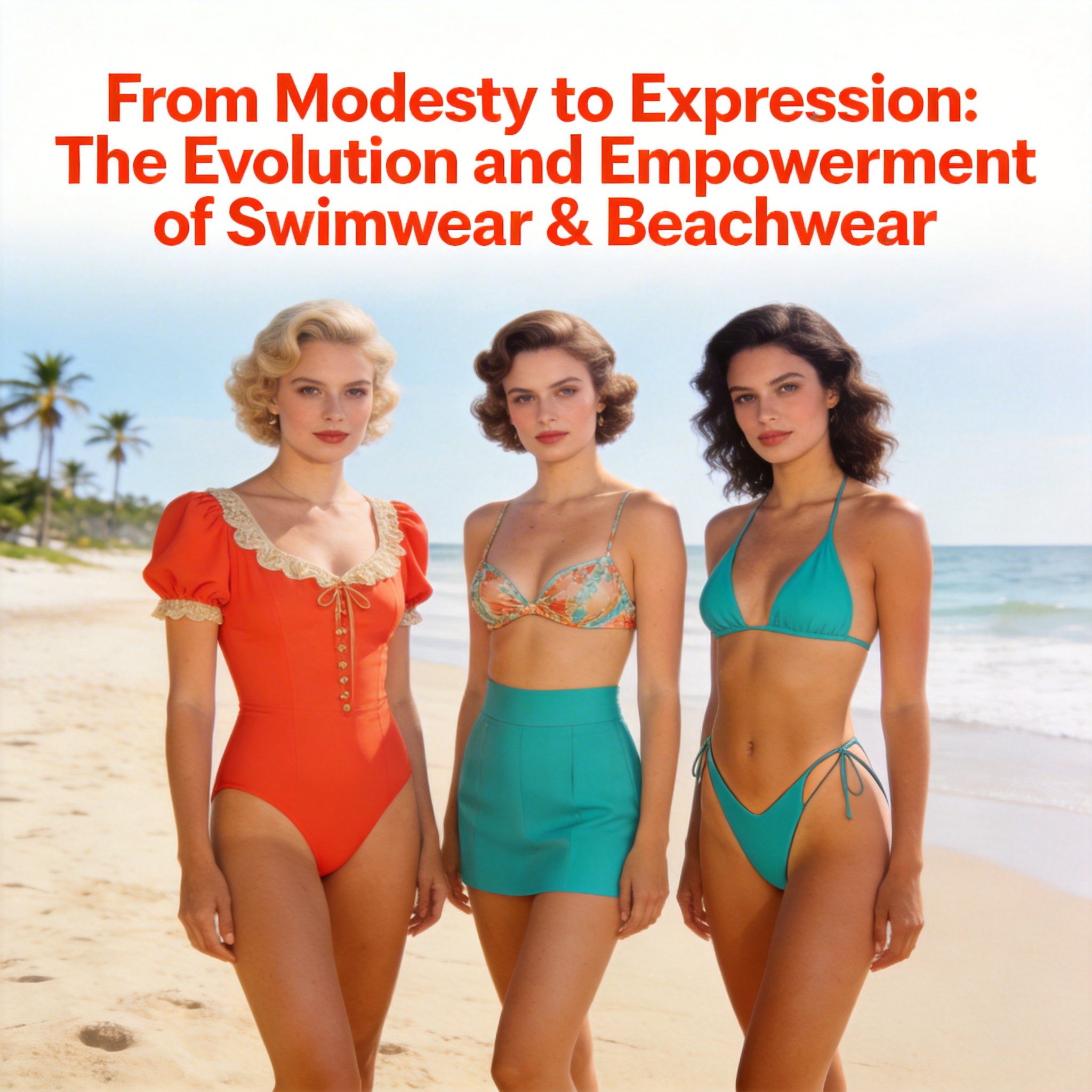
Remember the first time you slipped into a swimsuit that felt truly like an extension of yourself? Not just something to cover up, but something that made you feel confident, comfortable, and ready to embrace the sun, sand, and sea? That feeling encapsulates the remarkable journey of swimwear and beachwear – a journey far removed from the cumbersome, restrictive garments of the past. This isn’t merely about functional clothing for water; it’s a dynamic narrative woven through decades of social change, technological innovation, cultural shifts, and the relentless pursuit of self-expression. Today, the world of swimwear and beachwear stands as a vibrant testament to individuality, body positivity, and conscious consumption, evolving from symbols of modesty into powerful tools for personal celebration. Understanding its evolution, the nuances of modern design, and the principles guiding today’s choices empowers us to find pieces that do more than just get us wet – they help us shine.
The story begins, surprisingly, not with freedom, but with restraint. In the Victorian era, bathing was a highly regulated activity, often conducted in segregated areas or while fully clothed. Early “bathing costumes” were essentially modified daywear: heavy wool dresses, sometimes with bloomers, worn over corsets, reaching the knees, paired with stockings and even hats. These weren’t designed for swimming; they were designed to preserve modesty above all else, often becoming dangerously heavy and cumbersome when wet. The early 20th century saw incremental changes – shorter hemlines, lighter fabrics like cotton jersey, and the introduction of the “maillot” (a one-piece suit with a high leg cut, though still relatively modest). However, the true seismic shift arrived in 1946 with French designer Louis Réard’s invention of the bikini. Named after the Bikini Atoll where atomic tests had recently occurred (reflecting its perceived shock value), its mere two triangles of fabric caused global outrage. Yet, its daring simplicity, championed by figures like pin-up star Bettie Page and later Brigitte Bardot, symbolized a post-war liberation movement. The 1960s accelerated this trend: the mini-skirt influence led to even higher cuts, the introduction of stretch nylon and spandex revolutionized fit and comfort, and the thong bikini emerged. By the 1970s, the one-piece experienced a resurgence, often featuring bold patterns and higher cuts, moving beyond pure modesty towards sportier, more sculpted silhouettes. The 1980s brought power-shouldered tankinis, high-cut Brazilian bottoms, and the ubiquitous neon colors synonymous with Miami Vice. Each decade chipped away at the constraints, gradually shifting the focus from covering the body to celebrating it, albeit often within narrow, media-driven beauty standards.
The 21st century, however, marks the most transformative era yet, driven by powerful converging forces. Technological innovation is paramount. Modern performance fabrics like ultra-soft, quick-drying polyester blends, UPF 50+ sun protection textiles, and seamless construction techniques offer unprecedented comfort, support, and durability. We see advanced materials like recycled ocean plastics (ECONYL®) and bio-based fibers entering the mainstream, directly addressing the environmental impact of fast fashion. Simultaneously, a profound cultural shift towards body positivity and inclusivity has fundamentally reshaped the industry. Brands are increasingly recognizing that “one size fits all” is a myth. The demand for authentic representation has exploded, leading to extensive size ranges (from XXS to 6XL+), diverse skin tone options, and campaigns featuring models of all ages, ethnicities, body types, and abilities. This isn’t just marketing; it’s a necessary response to consumer demand for realistic and relatable imagery. Furthermore, sustainability consciousness has become non-negotiable for many. Consumers actively seek brands prioritizing ethical production, minimal waste, durable construction, and transparent supply chains. The rise of small, independent designers focused on artisanal craftsmanship, limited runs, and unique prints adds another layer of diversity and personalization. Finally, versatility defines modern beachwear. Pieces are designed to transition seamlessly from pool to patio, boardwalk to bar. Cover-ups become chic kaftans or sarongs, rash guards double as stylish tops, and modular designs allow for mix-and-match customization. The focus has irrevocably shifted: it’s no longer just about what you wear in the water, but how your entire beach or poolside experience makes you feel – confident, comfortable, and authentically yourself.
Choosing the right swimwear and beachwear today is therefore less about following fleeting trends and more about understanding your personal needs, values, and desires. Consider your primary activities: Are you a lap swimmer needing secure, athletic support? A relaxed lounger prioritizing comfort and coverage? A surfer requiring rash protection? Your answer dictates the essential silhouette – a sturdy underwire bra top, a flexible bandeau, a supportive sports-style one-piece, or a protective rash guard. Pay close attention to fabric composition; look for high-quality, fade-resistant blends with adequate stretch (often 15-20% elastane) for longevity. Prioritize construction: flatlock seams prevent chafing, robust hardware resists corrosion, and fully lined pieces maintain shape. Crucially, assess the brand’s commitment to inclusivity – does their size chart match reality? Do their images reflect diverse bodies? Investigate their sustainability practices: Are materials recycled or organic? Is packaging minimal? Is labor ethical? Don’t shy away from trying things on critically – move, sit, simulate activities. Does it stay put? Does it pinch? Does it make you feel good? Remember, the ultimate measure isn’t a number on a tag or adherence to a trend, but how you feel wearing it. Confidence is the ultimate accessory, and it stems from finding pieces that align with your body, your values, and your vision of enjoyment.
In conclusion, swimwear and beachwear have traversed an extraordinary path, evolving from instruments of restriction into powerful mediums of self-expression, comfort, and conscious identity. The historical journey, marked by courageous designers and shifting social norms, laid the groundwork. But it’s the confluence of cutting-edge technology, unwavering demands for inclusivity, genuine sustainability efforts, and a deep-seated desire for versatile, joyful experiences that truly defines the current landscape. This isn’t just about fabric and thread; it’s about the freedom to inhabit your space, by the water or under the sun, with authenticity and ease. As we continue to embrace diverse bodies, champion ethical practices, and prioritize personal well-being, the future of swimwear and beachwear promises even greater innovation, representation, and empowerment. So, step forward, explore the vast array of styles, honor your own unique form and values, and choose pieces that don’t just take you to the water, but help you dive deeply, joyfully, and unapologetically into the moments that matter. Your perfect beach or poolside experience begins with the simple, powerful act of choosing swimwear that feels like you.