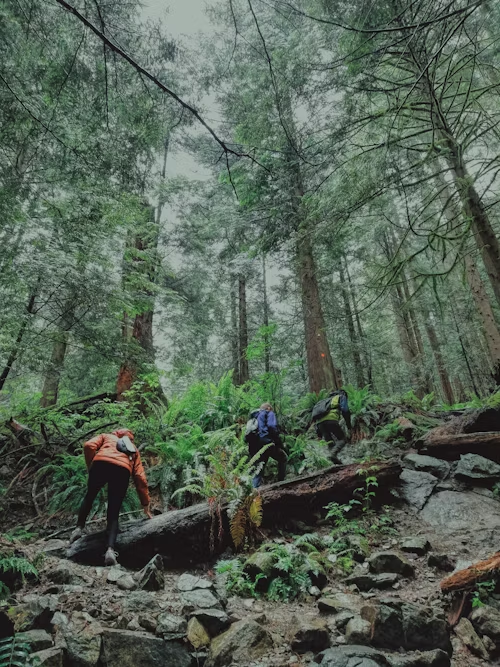
The wind bites at your cheeks as you push upwards on a remote mountain pass. Rain begins to fall, not as a gentle drizzle, but a sideways, stinging deluge. Your boots, seemingly moments ago comfortable, now feel heavy and cold. Yet, beneath the storm, a core warmth persists. Your jacket sheds water like a duck’s back, your base layer actively wicks away the sweat generated by the steep climb, and your gloves, impossibly thin, still allow dexterity for checking your map. This isn’t magic; it’s the quiet, relentless triumph of outdoor and technical apparel. More than just clothing, it’s a sophisticated ecosystem of science, material innovation, and deep understanding of human physiology interacting with harsh environments. It’s the critical interface between the adventurer and the elements, transforming potential suffering into sustained effort, comfort, and ultimately, safety. The evolution of this sector, driven by both recreational demands and extreme-condition necessities, represents one of the most fascinating convergences of textile engineering, functional design, and sustainable consciousness in the modern world. Understanding its layers, technologies, and underlying philosophy isn’t just about buying gear; it’s about appreciating the intricate dance between human ambition and planetary reality.
At its heart, outdoor and technical apparel operates on a fundamental principle: managing the microclimate. Unlike everyday clothing designed primarily for social contexts or mild indoor environments, technical garments are engineered to regulate the wearer’s immediate environment – the space between skin and fabric. This involves a complex, multi-layered system approach, often misunderstood as simply “warm” or “waterproof.” The foundational concept is the Layering System, typically broken down into Base, Mid, and Outer layers, each with distinct, non-negotiable functions. The Base Layer is the unsung hero, tasked with moving moisture away from the skin. Natural fibers like cotton, once ubiquitous, are now taboo in serious outdoors because they absorb and retain moisture, losing all insulating properties when wet and dramatically accelerating heat loss. Instead, advanced synthetics like polyester or merino wool dominate. Polyester offers excellent durability, quick drying, and cost-effectiveness, often enhanced with treatments for odor resistance. Merino wool, prized for its natural temperature regulation, softness, and inherent antimicrobial properties (meaning less laundry!), excels in variable conditions but can be slower to dry and more delicate. Crucially, both work via capillary action – the fabric structure actively pulls liquid sweat vapor away from the skin, spreading it across a larger surface area to evaporate quickly, keeping the skin dry and preventing chills. A poor base layer renders even the best mid or outer layer ineffective. Next, the Mid-Layer provides the primary insulation, trapping warm air close to the body. Here, the focus shifts to thermal efficiency. Traditional choices like fleece (polyester knit) remain popular for their warmth-to-weight ratio, breathability, and ease of care. However, the pinnacle lies in insulated jackets, utilizing either synthetic fill (like PrimaLoft, designed to mimic down’s loft but perform better when wet) or premium goose/down fill (offering unmatched warmth-to-weight but zero insulation when damp). The key innovation here is the precise engineering of baffles – the channels holding the insulation – to prevent cold spots and optimize heat retention, often combined with ultralight, durable face fabrics. Finally, the Outer Layer, or shell, is the protective barrier. Its primary jobs are to block wind, shed precipitation, and allow internal moisture (sweat) to escape. This is where membrane technology shines. Gore-Tex, the pioneering ePTFE membrane, remains iconic, offering guaranteed waterproofness and breathability through billions of microscopic pores. Modern alternatives like eVent use a similar membrane but employ a different lining treatment for potentially higher breathability. Softshells offer a compromise: highly breathable, wind-resistant, and water-repellent, ideal for dynamic activities in moderate conditions, sacrificing full waterproofing for greater flexibility and ventilation. The choice between hardshell (max protection) and softshell (max breathability) depends entirely on the anticipated intensity of activity and severity of weather. Beyond these core layers, specialized categories like footwear integrate waterproof membranes (Gore-Tex, etc.) with aggressive tread patterns, stiff soles for rock protection, and precisely tuned insulation levels. Gloves become intricate systems themselves, featuring waterproof-breathable inserts, high-loft insulation, reinforced palms, and touchscreen-compatible fingertips. Headwear utilizes lightweight, packable insulation and wind-blocking fabrics. Each component is meticulously designed, not in isolation, but as part of a cohesive, interdependent system where the failure of one layer can compromise the entire ensemble.
The relentless pursuit of performance has spurred extraordinary technological leaps, moving far beyond basic waterproofing. Material Science is the engine room. Nanotechnology enables super-hydrophobic (water-repelling) and oleophobic (oil-repelling) coatings that cause water to bead and roll off instantly, enhancing breathability and reducing weight. Smart Textiles are emerging, incorporating sensors to monitor core body temperature, hydration, or even UV exposure, feeding data to companion apps. Bio-based and Recycled Materials are rapidly gaining prominence, driven by consumer demand and industry commitments. Brands are using recycled ocean plastic (e.g., Parley Ocean Plastic yarns), repurposed fishing nets, and even food waste (like mushroom mycelium for leather alternatives) to create high-performance fabrics. PrimaLoft Bio, for instance, uses 100% bio-based fibers designed to degrade significantly faster in marine environments than conventional synthetics. Sustainability is no longer a niche concern; it’s integrated into the core design philosophy. This includes not just the raw materials, but also waterless dyeing technologies (like DyeCoo using CO2), PFC-free (Per- and Polyfluoroalkyl Substances) water repellents (historically used in DWR coatings, now largely phased out due to environmental concerns), and robust repair programs to extend garment lifespan. Simultaneously, ergonomics and fit have received unprecedented attention. Garments are sculpted using body mapping, with articulated elbows, pre-curved knees, gusseted crotches, and ergonomic hoods designed to move with the body during strenuous activity, eliminating restrictive pulling or bunching. Ventilation features like underarm zippers (pit zips) are standard on many shells, allowing targeted heat release without exposing the core. Weight reduction is obsessive; today’s ultralight backpacking jacket might weigh less than 10 ounces yet offer 20,000mm waterproofness and 20,000g/m²/24h breathability – figures unimaginable thirty years ago. This isn’t incremental improvement; it’s a paradigm shift where protection, comfort, durability, and environmental responsibility are increasingly seen as mutually reinforcing goals, not trade-offs. The modern adventurer expects gear that performs flawlessly in the alpine storm and carries a conscience.
Looking forward, the trajectory of outdoor and technical apparel points towards even deeper integration of intelligence, sustainability, and personalized performance. We can anticipate wider adoption of adaptive insulation, where materials automatically expand or contract their pore structure in response to temperature changes, regulating heat without manual layering adjustments. Self-healing fabrics, perhaps utilizing polymers that seal minor punctures when exposed to specific stimuli, could further enhance longevity. The circular economy model will mature, with brands taking full responsibility for their products’ end-of-life, implementing take-back schemes that feed materials directly back into new garments. Personalization will likely increase, with consumers able to customize aspects like insulation level, shell fabric, or even color combinations online, manufactured on-demand. Crucially, the democratization of technology means benefits once reserved for elite expeditions are filtering down to everyday hikers, commuters, and travelers. A lightweight, packable rain shell with 15,000mm waterproofness and excellent breathability is now accessible to anyone heading out for a weekend trek. This accessibility, however, comes with a responsibility. As consumers, understanding the why behind the technology – the physics of moisture management, the limitations of materials, the true meaning of breathability ratings – empowers us to make informed choices. It moves us beyond marketing hype to selecting gear that genuinely matches our intended activity, expected conditions, and personal values. Investing in high-quality, versatile technical apparel isn’t merely an expense; it’s an investment in safety, comfort, and the profound ability to engage deeply with the natural world, regardless of the forecast. It allows the focus to remain on the experience, the landscape, and the connection, rather than the struggle against the elements. When the storm hits, it’s not the fear of getting wet or cold that dominates, but the confidence that your gear, born from ingenuity and respect for the environment, has got your back. That’s the revolution: turning vulnerability into resilience, and transforming the mere act of being outside into a truly empowered adventure. The trail ahead promises even more innovative, sustainable, and intelligent ways to meet the elements head-on, ensuring that the journey itself, not the discomfort, remains the ultimate destination.