Beyond the Hype: How Digital Twins Are Quietly Building the Future, One Virtual Copy at a Time
Imagine a jet engine humming smoothly at 35,000 feet. Now picture its exact digital counterpart, living on a server farm miles away. This virtual twin isn’t static; it’s fed by hundreds of sensors streaming real-time data on temperature, vibration, fuel flow, and wear. As the physical engine operates, its digital doppelgänger runs complex simulations, predicting potential failures *before* they happen, optimizing maintenance schedules, and even testing hypothetical upgrades – all without grounding a single aircraft. This isn’t science fiction; it’s the tangible reality of Digital Twins, a foundational technology rapidly moving from buzzword to bedrock across industries. Far more than just a 3D model, a Digital Twin is a dynamic, intelligent virtual representation of a physical asset, process, or system, continuously updated by real-world data and capable of simulation, prediction, and optimization. Its power lies not in the virtual copy itself, but in the continuous, closed-loop conversation between the physical and digital realms, unlocking unprecedented levels of insight and control.
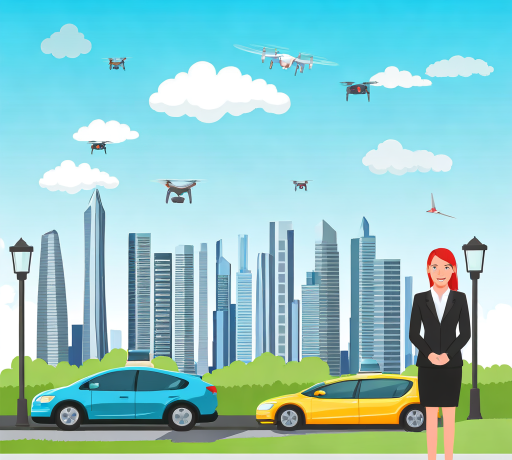
The core value of Digital Twins stems from their ability to bridge the gap between design intent and operational reality. Traditionally, engineers designed assets based on models and assumptions, then struggled to understand how those designs performed in the messy, variable world. Maintenance was often reactive or based on rigid schedules, leading to unnecessary downtime or catastrophic failures. Digital Twins flip this paradigm. By integrating Internet of Things (IoT) sensors, advanced analytics, artificial intelligence (AI), and sometimes even augmented reality (AR), they create a living, breathing digital shadow of the physical object. This allows for continuous performance monitoring, root-cause analysis of anomalies, and predictive maintenance. For instance, in manufacturing, a Digital Twin of a production line can simulate the impact of changing a single component, predicting how it affects overall equipment effectiveness (OEE) days or weeks before physical implementation. In smart cities, Digital Twins of entire districts model traffic flow, energy consumption, and emergency response scenarios, enabling planners to test policies virtually before rolling them out. The result is reduced operational costs, minimized unplanned downtime, enhanced product development cycles, and significantly improved decision-making – moving from guesswork to data-driven certainty.
However, realizing the full potential of Digital Twins demands moving beyond simple visualization. True maturity requires robust data integration, sophisticated physics-based modeling, and seamless interoperability. The biggest hurdles often lie not in the technology itself, but in the organizational and data architecture. Siloed data sources, inconsistent data formats, and legacy systems can cripple a Digital Twin initiative. Building an effective twin necessitates breaking down these barriers, establishing common data standards, and ensuring secure, real-time data pipelines. Furthermore, the complexity scales dramatically: a twin of a single wind turbine is vastly different from a twin of an entire power grid or a global supply chain. The most successful implementations focus on specific, high-value use cases – like optimizing a critical piece of machinery or simulating patient flow in a hospital wing – rather than attempting a monolithic, enterprise-wide twin overnight. Crucially, the human element remains vital. Digital Twins provide powerful insights, but domain expertise is essential to interpret the data, ask the right questions, and translate virtual findings into effective physical actions. The technology amplifies human intelligence; it doesn’t replace the need for skilled operators, engineers, and analysts who understand the context the twin represents.
As we look ahead, the evolution of