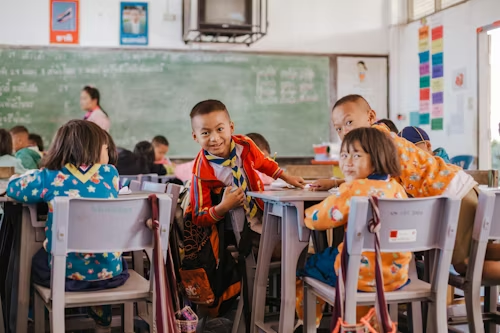
Education stands at a crossroads. For decades, the traditional model of schooling—characterized by rote memorization, standardized testing, and the “sage on the stage” lecturing style—has dominated the landscape. While this approach has its merits in transmitting specific knowledge blocks, it often struggles to equip learners with the agility, critical thinking, and collaborative skills required to navigate the complexities of the 21st-century workforce. As the world becomes increasingly interconnected and technology-driven, the gap between what is taught in the classroom and what is needed in real life continues to widen. Enter Project-Based Learning (PBL), a pedagogical approach that is not merely a teaching strategy but a fundamental shift in how we conceive of learning itself. By engaging students in meaningful, real-world challenges, PBL transforms the classroom from a place of passive absorption into a vibrant hub of active inquiry, creativity, and problem-solving.
Understanding the Essence of Project-Based Learning
At its core, Project-Based Learning is a teaching method in which students learn by actively engaging in real-world and personally meaningful projects. However, it is crucial to distinguish PBL from simply “doing a project.” In a traditional classroom, a project often serves as the dessert—a culminating activity that students undertake after they have learned the content through lectures and worksheets. In contrast, in a high-quality PBL environment, the project is the main course. It is the vehicle through which the learning happens.
The definition of high-quality PBL has been refined over the years by organizations such as the PBLWorks (formerly the Buck Institute for Education). According to their Gold Standard PBL model, for a project to be truly effective, it must include seven essential project design elements. These include a challenging problem or question that drives the learning, sustained inquiry over an extended period, authenticity—meaning the project relates to the real world or students’ lives—and student voice and choice. Furthermore, students must engage in reflection, critique, and revision, and, perhaps most importantly, they must create a Public Product that is presented to an audience beyond the classroom walls. This final element distinguishes PBL from standard schoolwork; knowing that their work will be seen by experts, parents, or the community raises the stakes for students, motivating them to produce high-quality work.
The Shift from Passive to Active Learning
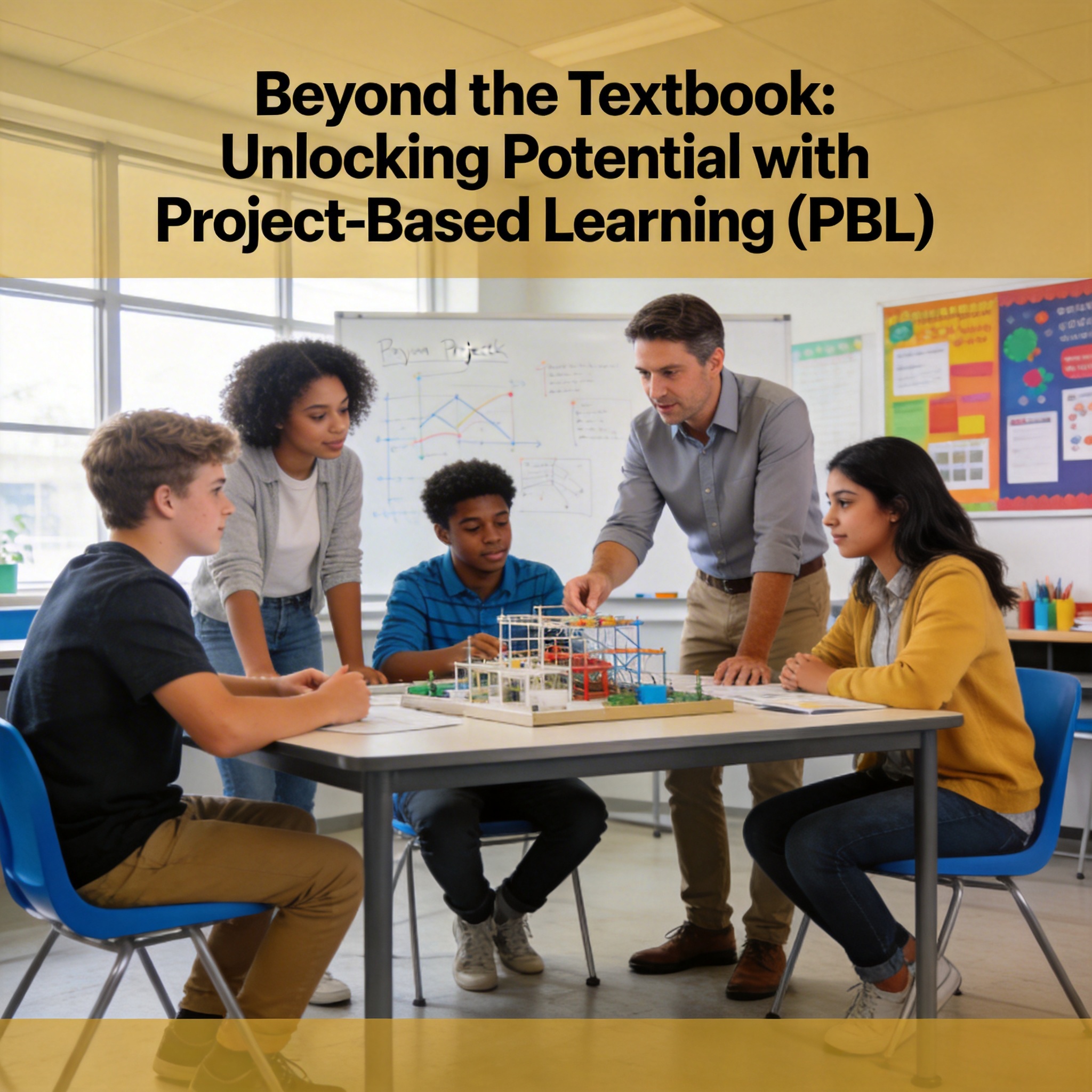
The transition to PBL represents a seismic shift in the dynamic of the classroom. In a traditional setting, the teacher is the holder of knowledge, dispensing facts to students who are expected to regurgitate them on command. PBL flips this script. The teacher moves from being the “sage on the stage” to the “guide on the side.” This does not mean the teacher is less involved; rather, their role changes to that of a facilitator, coach, and mentor. They design the project, scaffold the learning experiences, and provide ongoing feedback, but they allow students the space to struggle, explore, and discover solutions independently.
This active engagement is rooted in constructivist theories of learning, which suggest that people learn best when they construct their own understanding and knowledge of the world, through experiencing things and reflecting on those experiences. When students tackle a complex project, they must draw upon knowledge from various disciplines. For example, a project focused on designing a sustainable community garden requires knowledge of biology (plant life cycles), mathematics (calculating area and budget), and literacy (writing proposals to the school board). By integrating subjects, PBL demonstrates the interconnectedness of knowledge, mirroring the way problems are solved in the professional world. This interdisciplinary approach helps students move away from siloed thinking and develop a more holistic understanding of how different fields interact.
Cultivating Essential Skills for the Future
While content knowledge is undeniably important, the modern workforce prioritizes “soft skills” or, as they are increasingly being called, “future-ready skills.” These include critical thinking, collaboration, communication, and creativity—the often-cited “4 Cs.” Project-Based Learning is arguably the most effective pedagogical framework for cultivating these skills because they are woven into the very fabric of the process.
Consider collaboration. In a PBL unit, students rarely work in isolation. They are grouped into teams where they must negotiate roles, manage conflicts, and rely on one another’s strengths to achieve a common goal. They learn that their individual success is tied to the success of the group. Similarly, communication skills are honed not just through writing essays, but through pitching ideas, debating strategies with teammates, and presenting their final product to a public audience. They learn to tailor their message to different audiences, a vital skill in any career.
Critical thinking and problem-solving are at the heart of every PBL project. The driving question of a project should not have a simple “Google-able” answer. Instead, it must be complex and open-ended. As students work through the project, they encounter obstacles and unforeseen challenges. They must analyze data, evaluate sources, and synthesize information to make informed decisions. They learn that failure is not a dead end but a necessary part of the learning process. Through the cycle of critique and revision, they learn to give and receive constructive feedback, viewing their work not as a finished product but as an evolving draft that can always be improved. This growth mindset—the belief that abilities can be developed through dedication and hard work—is one of the most valuable gifts a PBL education can bestow.
The Benefits of Authenticity and Engagement
One of the most persistent challenges in education is student engagement. It is not uncommon to see students bored, disengaged, or merely “going through the motions” to get a grade. PBL addresses this by anchoring learning in authenticity. When students see that their work matters—that it has relevance beyond the classroom walls—their intrinsic motivation increases dramatically.
Authenticity in PBL can take many forms. It might involve solving a real problem faced by the local community, such as designing a plan to reduce local plastic waste or creating a marketing campaign for a local non-profit. It might involve using the same tools and processes that professionals use, such as engineers using CAD software or historians analyzing primary source documents. When students know they are tackling a genuine problem, the question “Why do we need to learn this?” answers itself. They are no longer learning for the sake of a test; they are learning to make a difference.
Furthermore, the element of “Voice and Choice” is a powerful driver of engagement. In PBL, students are often given agency over how they approach the project. They might be able to choose the specific topic they research within a broader theme, the format of their final product (a video, a physical prototype, a written report, or a performance), or the roles they assume within their group. This autonomy fosters a sense of ownership over the learning. When students feel they own the work, they are more invested in the outcome and more likely to persist when the work becomes difficult.
Implementing PBL: Practical Steps and Considerations
While the benefits of PBL are clear, implementing it effectively requires careful planning and a willingness to embrace some level of chaos. It is not a “plug-and-play” teaching method; it requires a shift in mindset for both educators and students. For teachers new to PBL, it is often recommended to start small. A full-scale, interdisciplinary project spanning an entire semester can be overwhelming. Instead, teachers might begin with a “mini-project” that lasts just a week or two, focusing on a specific set of learning objectives.
The design phase is critical. Teachers must start with the end in mind. What are the essential standards or learning goals that need to be met? From there, they must craft a challenging Driving Question. A good driving question is provocative, open-ended, and linked to the core of what students need to learn. For example, instead of asking “What is the history of our city?” a driving question might be “How can we design a museum exhibit that teaches visitors about the untold stories of our city’s history?”
Once the project is launched, the teacher’s role shifts to management and facilitation. This involves scaffolding instruction—providing just-in-time workshops or lessons on specific skills (e.g., how to write a bibliography, how to use a specific software tool) as students need them. It also involves managing group dynamics. Teachers need to help students navigate conflict and ensure that workload is distributed equitably.
Assessment in PBL also looks different. While traditional tests can still play a role, assessment in PBL is primarily performance-based. Teachers use rubrics to assess not only the final product but also the process.