Beyond the Hype: How Augmented Reality is Seamlessly Weaving Itself into Our Daily Reality
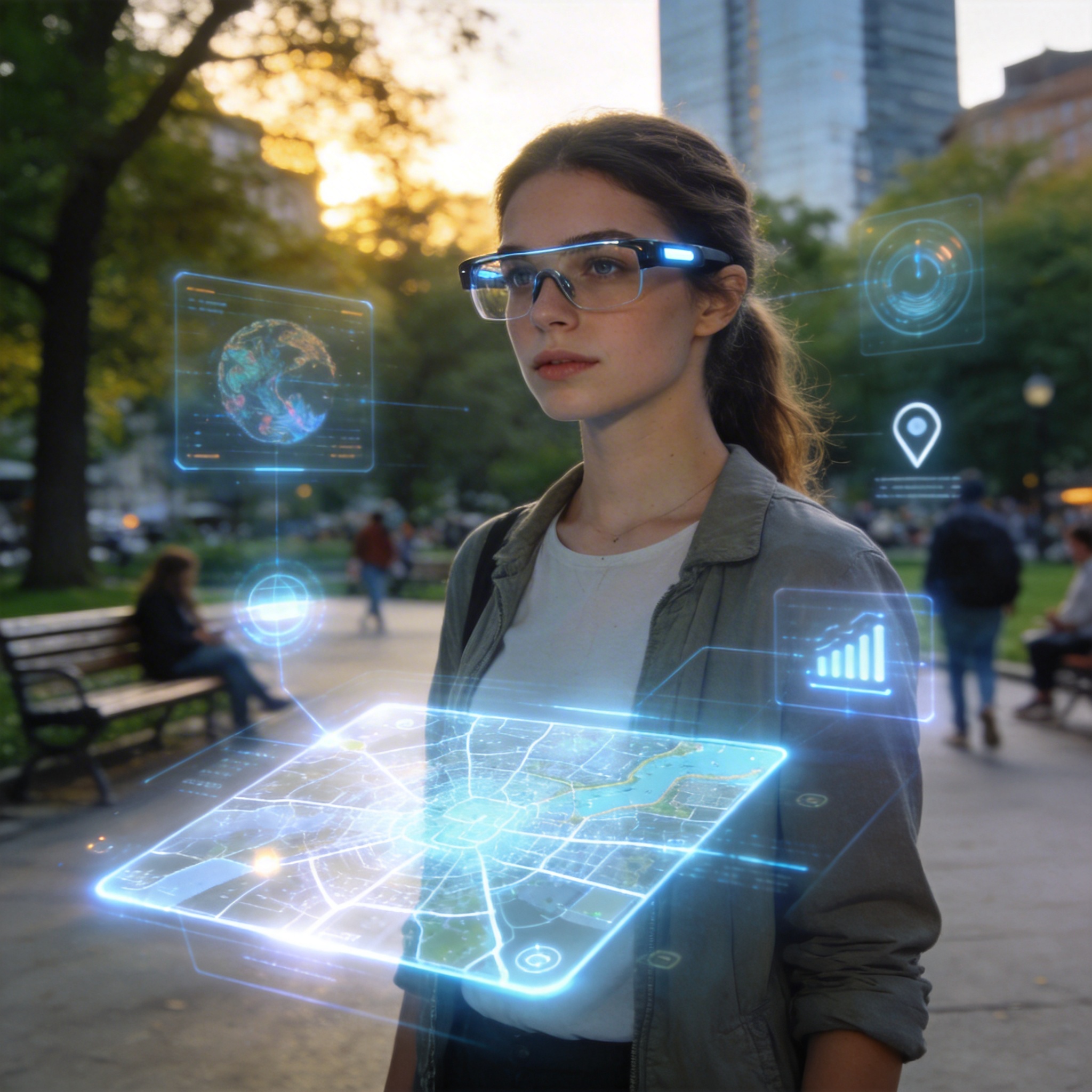
Remember the first time you pointed your phone at the sky and saw digital creatures superimposed on your actual backyard? Or perhaps you’ve stood in a furniture store, pointing your camera at an empty corner, watching a virtual sofa materialize perfectly scaled against your walls? That moment of disorienting yet undeniably cool realization – where digital information seamlessly layers onto the physical world in real-time – is the essence of Augmented Reality (AR). Often confused with Virtual Reality (VR), which creates a completely immersive digital environment, AR enhances our *existing* reality. It uses your smartphone, tablet, or specialized smart glasses as a window, overlaying computer-generated images, text, animations, or data onto the live view of the world around you. Think of it as a sophisticated digital lens that adds context, information, and interactivity to everything we see. While early AR felt like magic confined to sci-fi movies or niche apps, it has rapidly matured. Powered by advanced computer vision, high-resolution displays, precise location tracking (GPS, LiDAR), and powerful mobile processors, AR is shedding its novelty status and becoming an increasingly practical, pervasive, and profoundly useful technology integrated into the fabric of daily life, work, and play.
The transformation from gimmick to genuine utility is evident across diverse sectors. In retail and e-commerce, AR has moved far beyond simple virtual try-ons. Brands like IKEA, Sephora, and Warby Parker leverage AR to let customers visualize furniture in their homes with near-perfect scale, test makeup shades instantly via selfie, or see how glasses fit their face before purchasing. This isn’t just fun; it significantly reduces purchase anxiety, cuts down returns, and boosts customer confidence. Moving into the industrial and enterprise realm, AR is revolutionizing complex workflows. Field technicians servicing wind turbines or manufacturing equipment can now wear AR glasses displaying step-by-step repair instructions, schematics, and real-time data overlays directly in their field of view, guided by remote experts seeing what they see. This drastically improves efficiency, reduces errors, minimizes downtime, and enables faster training. Similarly, in healthcare, surgeons are using AR headsets during procedures to project critical patient data, CT scans, or 3D organ models precisely onto the surgical field, enhancing precision and planning. Architects visualize building designs at scale on construction sites, educators bring interactive 3D models into classrooms, and logistics companies optimize warehouse picking routes through AR-guided navigation. Even social interaction is evolving; shared AR experiences allow friends to collaborate on decorating a virtual room or play games together in the same physical space, bridging distances in new ways.
Yet, the true power of AR lies not just in specific applications, but in its potential to fundamentally alter how we perceive, interact with, and derive meaning from the physical world. As AR hardware becomes more sophisticated – lighter, more stylish smart glasses with longer battery life and robust gesture control – and as 5G networks enable seamless streaming of complex AR content, the barrier to entry plummets. We stand on the brink of a shift where digital information won’t just be *accessed* on screens, but intelligently *integrated* into our visual perception. Imagine walking down a street where historical facts appear beside landmarks, language translations float above foreign signs, or nutritional information materializes when you look at food in a grocery store. However, this integration demands careful consideration. Privacy concerns are paramount: constant environmental